


Structures and Dynamics
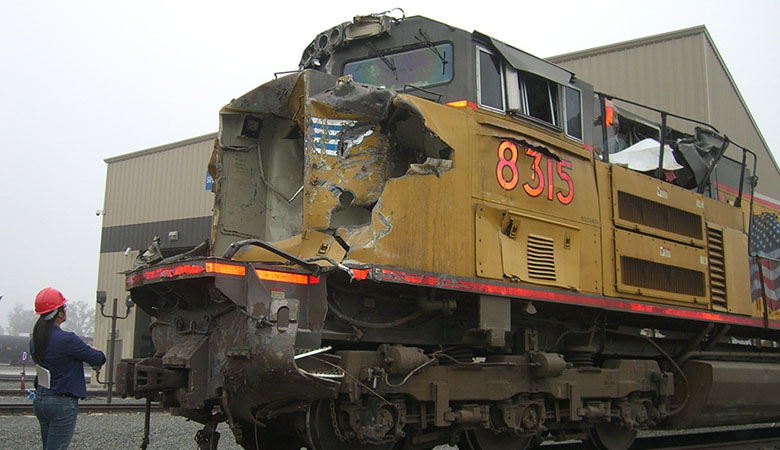
The U.S. DOT Volpe Center’s Structures and Dynamics Division improves the performance, safety, and resilience of the rail transportation system by applying engineering expertise in vehicle-track interaction, mechanical wear, fatigue, and fracture, soil mechanics, and vehicle impact energy management.
Some highlights of our work include:
- Conducting rail equipment crashworthiness research since 1993, focusing on the types of structural modifications that can make rail equipment safer with a deep understanding of the factors involved in passenger protection and impact absorption
- Studying rail and component structural integrity research since 1988 on rail integrity, heavy axle loads, rail grinding practices, alternative inspection procedures, potential benefits from improved non-destructive testing, and wheel performance
- Producing rail tank car safety research and findings from full-scale impact tests in support of FRA since 1980, with a focus on puncture resistance, damage tolerance, residual cracks, and the structural behavior of tank cars during a derailment or collision
- Conducting rail ties and fasteners research since 2007 on safety and performance issues
- Evaluating issues related to rail track buckling research through use of advanced corridor evaluation systems, appropriate inspection thresholds and guidelines, advanced instrumentation use, data analysis, and computer modeling tools
Our Capabilities
Engineering and Technology Deployment to Enhance Transportation
- Assess the dynamic performance of ground transportation vehicles
- Apply materials engineering principles to understand and improve rail component performance and tank structural integrity
- Plan, manage, and implement vehicles and rail structures, dynamics, and materials behavior
- Interpret analytic and experimental investigations
Safety and Security Assessments
- Analyze data from crash and incident reports, inspections, tests, and other sources to identify causes and propose solutions that will prevent or mitigate hazards
- Focus on the types of structural modifications that can make rail equipment safer, specifically passenger protection and impact absorption
- Conduct safety and performance research related to railroad ties and fasteners
Meet Our Team
 Brian Marquis
Chief
Brian Marquis, MS, PE, is a mechanical engineer with a BS and MS from Tufts University (Cambridge, MA) and more than three decades of focused experience in railroad safety and track-geometry engineering at the U.S. DOT Volpe Center. A recognized authority on track geometry for freight, passenger, and high-speed service, he has led development of regulations and guidance that inform national safety standards and day to day operational practice.
Marquis applies core mechanical engineering principles and systems thinking to complex rail performance and safety challenges, integrating civil, mechanical, and operational disciplines to produce practical, safety focused solutions. His work on procedures to evaluate automated track geometry systems has advanced the adoption of reliable measurement technologies and methods, improving the accuracy and trustworthiness of critical rail inspection data.
Currently, Marquis supports FRA and Amtrak by assessing analytical models for the new Acela trainset procurement—translating advanced vehicle track analysis into actionable guidance that reduces risk during fleet modernization. He also manages teams deployed to rail incidents nationwide and partners with the NTSB in post crash investigations. For example, following the Penn Station derailments in 2017, Marquis led site measurements and track and equipment analyses that identified a geometric mismatch at a new rail connection and a weakened track structure that led to rail spreading—findings that were essential to determining root causes and safeguarding passengers.
His work spans theoretical vehicle track dynamics, practical field measurement, standards development, and international collaboration. As a member of the International Scientific Committee for the Symposium on Dynamics of Vehicles on Roads and Tracks, Marquis helps bridge academic research and applied practice—ensuring the U.S. DOT Volpe Center’s work aligns with leading global science and engineering.